

Where does outdoor stand in a digital age?
People stare at their phones all day, yet they still travel the same streets to work and back. Outdoor sits on that route and gives a plan the repetition and local presence that digital struggles to build on its own.
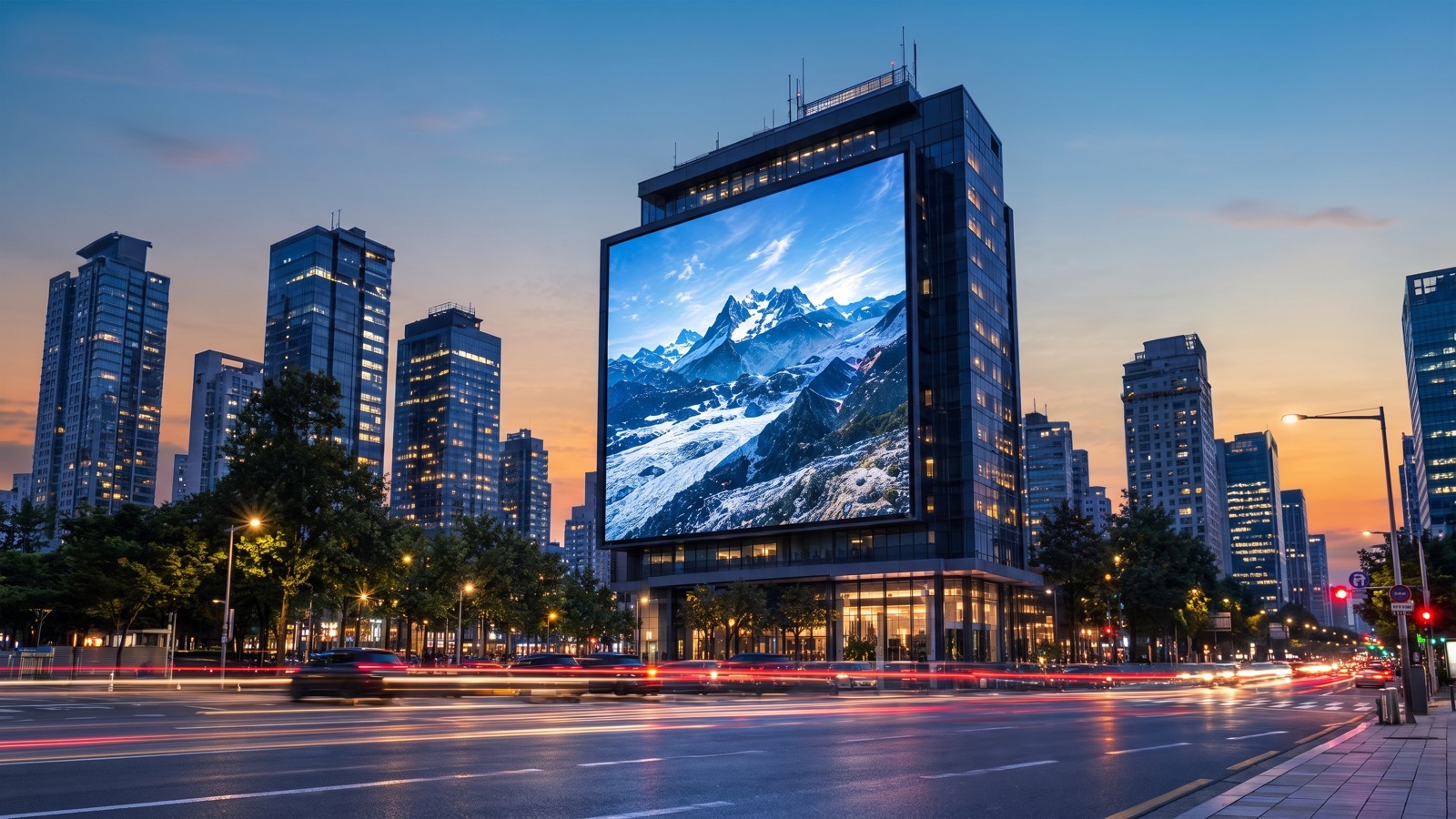
On the way to work and on the way home, there's usually a phone in your hand. The route, though, barely changes: the same junction, the same bus stop, the same bridge approach.
Most digital advertising plays out on that phone's screen. Outdoor sits on the route itself. Both reach the same person on the same day, but at different moments and with a different kind of attention, and whoever builds the plan has to account for that.
Reach you build on the street
Outdoor's most obvious trait is that you can't skip it. There's no ad blocker and no skip button. The billboard is simply there, and everyone who walks past sees it whether they mean to or not.
There's still a gap between being seen and being read. People notice the billboard as they pass, but they don't stop to study it. That's what makes the design hard: a message that reads from a distance, in a few seconds, on the move. A crowded image, or several messages squeezed onto one surface, can waste even the best location.
That visibility has a side effect, too. A brand that shows up on a big surface in the middle of the city settles into the viewer's mind as established and sure of itself. An image that flashes past on a phone has a hard time doing that alone. Being seen in public space makes a brand feel like part of the city's everyday life.
Frequency and local presence
Outdoors, frequency builds itself. Someone who takes the same road every day sees the same message for weeks. That repetition is a gift for a short, memorable message and a wasted surface for a long, complicated one.
That makes site selection the most labor-intensive part of an outdoor plan. You need to know who passes which face, and when. A road leading to a university campus and one leading to an industrial zone, for example, carry two completely different audiences through the same city.
Local presence comes naturally as well. Say a bakery chain opens a new branch. With a few faces on the neighborhood's main street and at the bus stop closest to the shop, it can speak directly to the people who live there. There's no need to spread the same message across the whole city. Location becomes part of the message; a phrase like "two streets away" only means something when you read it on that street.
Digital outdoor screens (DOOH) add flexibility. The same screen can rotate messages by time of day or day of the week, showing a breakfast product in the morning and an offer that suits the commute home in the evening. And changing the message mid-campaign doesn't mean waiting for new prints and a fresh install.
Planning it with mobile and social
Outdoor's weak spot is well known. Nobody can tap a billboard or drop the product into a basket the moment they see it. That's why outdoor should be planned together with the phone the viewer picks up a few minutes later.
Imagine someone who notices a new product on a billboard, then opens their phone while waiting at a stop a little further on. If a mobile ad in the same visual language turns up in that area on the same day, the two encounters complete each other. The billboard introduces the product and the phone ad opens the way to buying it. Location-based targeting makes this pairing possible, and following the rules on personal data is part of the plan.
For that to work, the visual language of both channels has to be designed together from the start. If the billboard gets made at one desk and the mobile ad at another, the viewer won't connect the two.
The pairing helps with measurement as well. Outdoor's effect is hard to isolate on its own. Looking at how searches, store visits or mobile ad engagement shift in the neighbourhoods with billboards during the campaign at least gives you a direction.
Social can offer a similar bridge. Something eye-catching on the street can turn into something people photograph and share. There's no guarantee, but asking "why would anyone photograph this?" while you design the billboard improves the odds that the work travels beyond the street.
For your next plan, map the route your audience takes through the day, then put the billboards along that route and the mobile message in the moments they spend waiting.